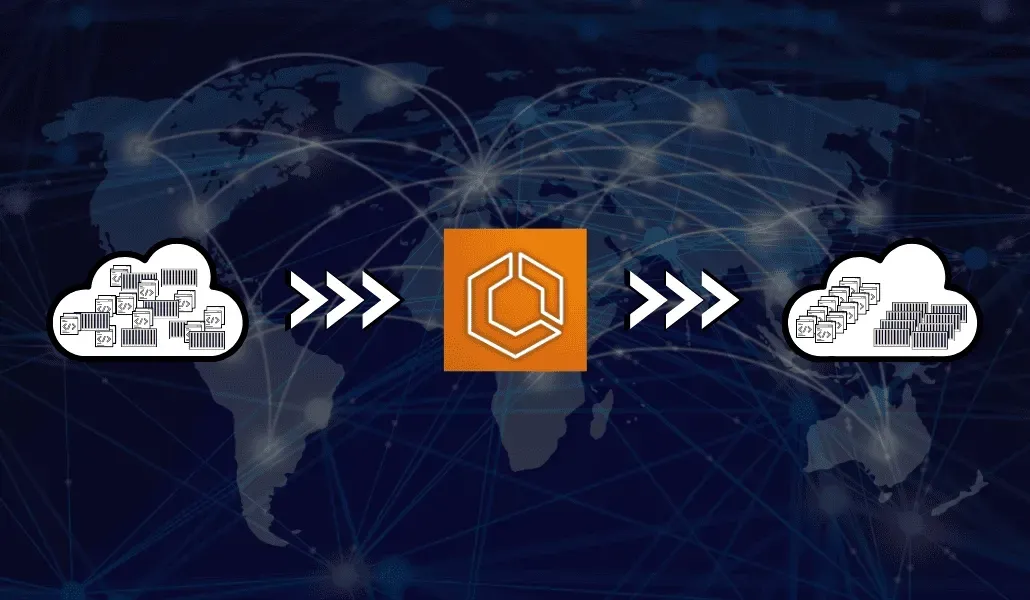
Modernization of Application for Containerization
Scalability, Efficiency, Container Orchestration
What is Amazon Elastic Container Service?
Amazon Elastic Container Service (Amazon ECS) is a container management service offered by Amazon Web Services (AWS). It enables you to run, manage, and scale applications in Docker containers efficiently in the AWS cloud. Amazon ECS simplifies the deployment and operation of container-based applications, providing a platform for orchestration, auto-scaling, load balancing, and resource management.
Key Concepts of Amazon ECS
Containers
Containers are isolated units of software that include application code, its dependencies, and configurations. They ensure that an application runs consistently in different environments.
Orchestration
Amazon ECS provides tools for orchestrating the execution of containers within a cluster. This involves defining tasks (sets of containers that should run together), resource allocation, container communication management, and task execution on virtual machine instances.
Clusters
An ECS cluster is a set of computing resources, such as EC2 instances (AWS virtual machines), where containers are executed. You can create and scale clusters according to your application's needs.
Tasks
An ECS task is a unit that defines the execution of one or more containers together on a virtual machine instance. These containers share resources and can communicate with each other.
Services
ECS services allow you to maintain a specified number of instances of your task running, ensuring continuous availability and automatic scaling based on demand.
Load Balancing
Amazon ECS can be integrated with AWS load balancing services, enabling the distribution of traffic among running container instances, enhancing application resilience and scalability.
Integration with Other Services
Amazon ECS can be integrated with other AWS services, such as Amazon Elastic Container Registry (ECR) for container image storage, AWS IAM for permission management, and Amazon CloudWatch for monitoring and logging.
Use Cases
Amazon ECS is used in a variety of scenarios and use cases, providing flexibility to meet the needs of different types of applications and development teams. Some of the most common use cases related to ECS include:
- Web Applications and Sites Many companies use ECS to deploy and manage their web applications and sites. ECS facilitates the deployment of microservices and scalability of these applications to handle traffic fluctuations.
- Batch Processing Workloads ECS is a popular choice for batch processing workloads such as image processing, data analysis, report generation, and other tasks that can be executed in parallel.
- Microservices ECS is often used to deploy microservices architectures, where different components of an application are packaged into individual containers and deployed separately, allowing for independent maintenance and scalability.
- Serverless Computing Applications ECS also offers serverless options like Fargate, allowing you to run containers without worrying about the underlying infrastructure.
Benefits of Amazon ECS
There are several reasons to consider using Amazon ECS:

Flexible Scalability
ECS allows containers to automatically scale up or down based on application demand. This ensures you have the necessary resources available to handle traffic spikes and variable workloads.

Simplified Orchestration
ECS provides tools for defining, running, and managing container tasks and services. This simplifies the complex orchestration of containers and communication between them.

Continuous Deployments
With ECS integration with services like Amazon CodePipeline and AWS CodeDeploy, you can automate continuous deployments of your containerized applications, making the release process faster and more reliable.

Integration with AWS Ecosystem
ECS is fully integrated with the AWS ecosystem, making it easy to combine with other services such as load balancing, data storage, security, and monitoring.

Security
ECS offers security features, including integration with AWS Identity and Access Management (IAM) for granular control of permissions and access policies. You can restrict who can access and manage ECS resources.

Monitoring and Logs
ECS integrates with Amazon CloudWatch, allowing you to monitor performance metrics, set alarms, and collect logs for analysis and debugging.

Simplified Management
With ECS, AWS manages the underlying infrastructure, such as EC2 instance provisioning and load balancers, allowing you to focus on application development and management.
Capacity Management
ECS offers various options for managing computing capacity. You can use standard EC2 instances to run your container tasks. Additionally, EC2 Spot Instances provide the ability to leverage discounted EC2 instances for interruption-tolerant workloads.
Multi-Region and High Availability
ECS supports deployments in multiple AWS regions, ensuring high availability and disaster recovery.
Cost Optimization
As part of AWS, ECS offers flexible pricing models, allowing you to pay only for the resources you actually use. Efficient resource utilization can also help reduce operational costs.