
Amazon CloudFront Specialization
Amazon CloudFront is a content delivery service from Amazon Web Services (AWS). It allows you to distribute content such as media files (e.g., videos, audios, images), documents, or other static content through a high-availability, low-latency content delivery network (CDN).
By using CloudFront, you can improve loading speed and content delivery to end-users regardless of their location. This is possible because CloudFront stores copies of your files in multiple data centers worldwide, allowing it to deliver content from the nearest data center to the end-user. Additionally, CloudFront offers several security features, including SSL/TLS encryption and origin authentication to ensure data privacy and integrity.
CloudFront is a popular choice for content distribution over the internet, especially for high-traffic applications and websites requiring high availability and low latency. It can be used independently or integrated with other AWS services, such as Amazon S3 (for storing files) and Amazon Route 53 (for DNS management).

Expertise in Amazon CloudFront

CloudDog is an Amazon Web Services (AWS) Service Delivery Partner (SDP) that provides implementation, consulting, and support services for AWS products and services. SDPs specialize in different areas and can help companies make the most of AWS products and services, including Amazon CloudFront.
In March 2020, we obtained the AWS Service Delivery Partner Designation for Amazon CloudFront due to our history of excellence in developed solutions.
With this achievement, CloudDog became a part of an exclusive group of partners specialized in delivering Amazon CloudFront-related services worldwide.
Amazon CloudFront Use Cases
The list below contains some Amazon CloudFront use cases implemented by CloudDog and validated by Amazon Web Services:
Static Content Delivery Acceleration
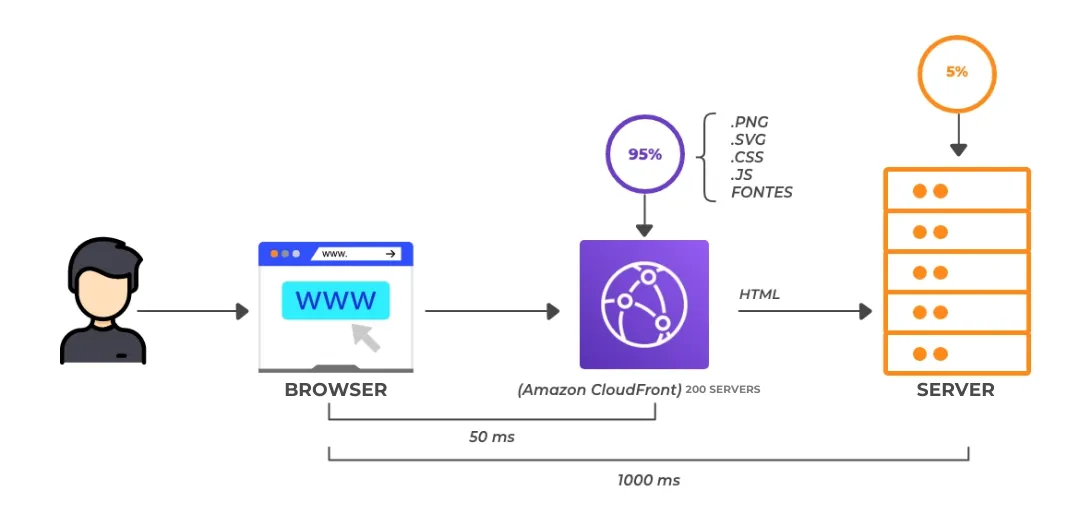
One of the key factors to enhance the experience on a website is to serve all static content, such as JavaScript, stylesheets, fonts, images, and videos, with the lowest possible latency. By using CloudFront, all your static content is served from the nearest EDGE, reducing network traffic to your servers and improving overall performance. In this scenario, it is possible to see that even when the latency between the end client and the server is 1000ms, static content can be served with average latencies of 50ms.
Dynamic Content Delivery Acceleration
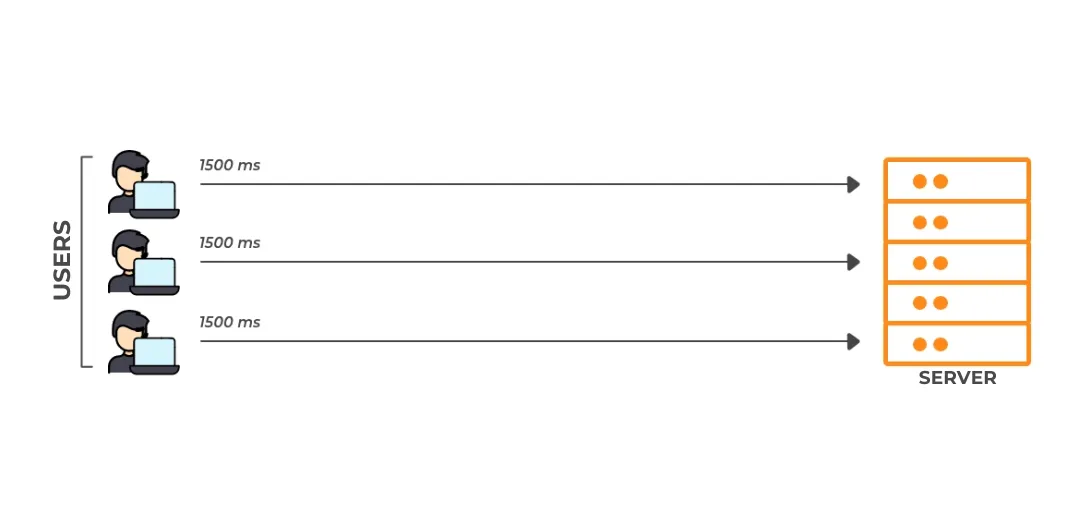
With the increasingly widespread use of websites using HTTPS, the time required to establish a connection with servers has also increased (due to the HTTPS handshake protocol). Therefore, reducing latency between the end client and the server has become more necessary. In the scenario below, it can be observed that without the use of CloudFront, each user ends up spending the same amount of time to establish communication with the server.
After implementing Amazon CloudFront and configuring it for dynamic content acceleration, the first client will take the same time. However, subsequent clients will experience superior performance as the connection between CloudFront and the server is reused.
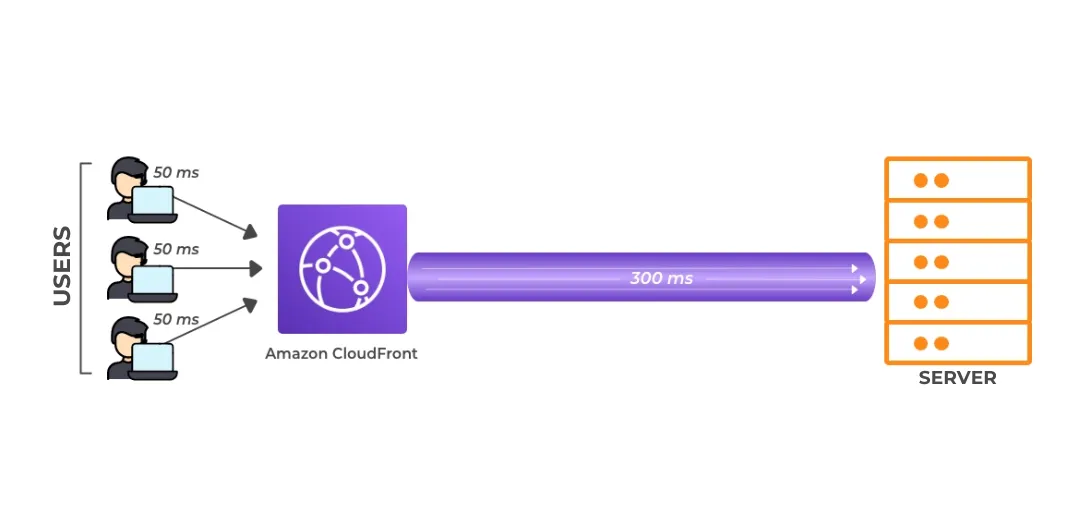
Image Optimization Using AWS Lambda Edge
Often, websites and content management systems do not optimize images properly.
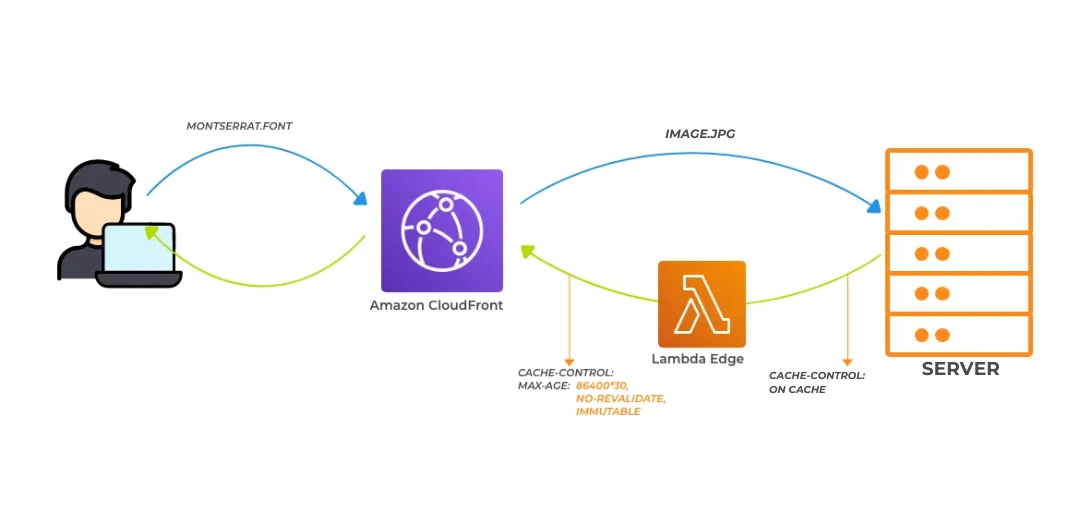
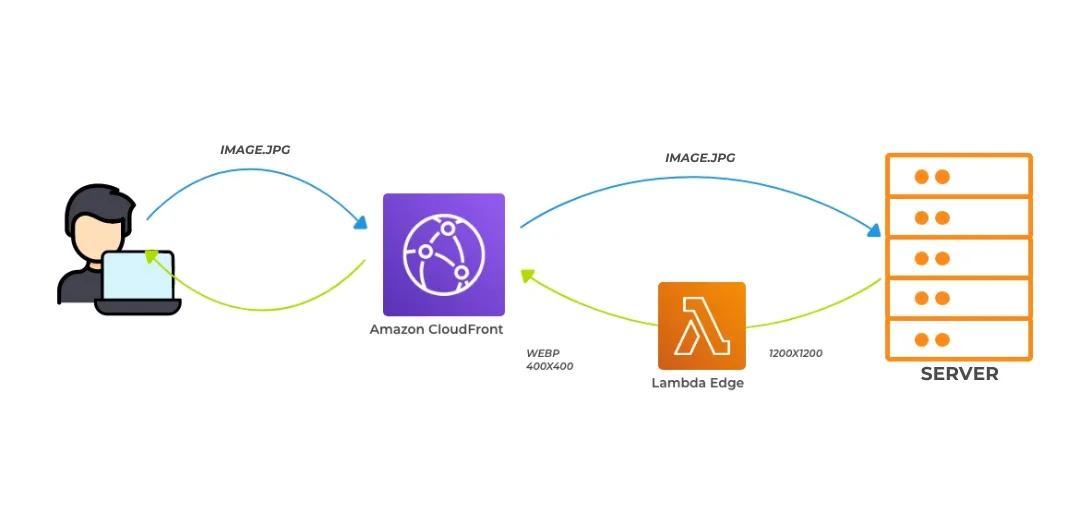
By optimizing images using AWS Lambda Edge, all the complexity related to optimization is handled by the CDN itself. It identifies images that can be optimized, performs the optimization process, and stores the optimized image for future use. It can even transform JPG files into standard WEBP files to further reduce loading time and network traffic. In some scenarios, we can optimize image size by more than 80%.
Cache Parameter Optimization
Frequently, e-commerce systems and websites do not configure cache parameters properly, and despite being relatively simple, the team maintaining it often lacks the authority to do so.
After making these adjustments, on the first visit by the end customer, performance is close to the original. However, on a second visit, resources that would be loaded again are delivered from the browser's local cache, drastically reducing load time and network consumption.
Online Video Streaming
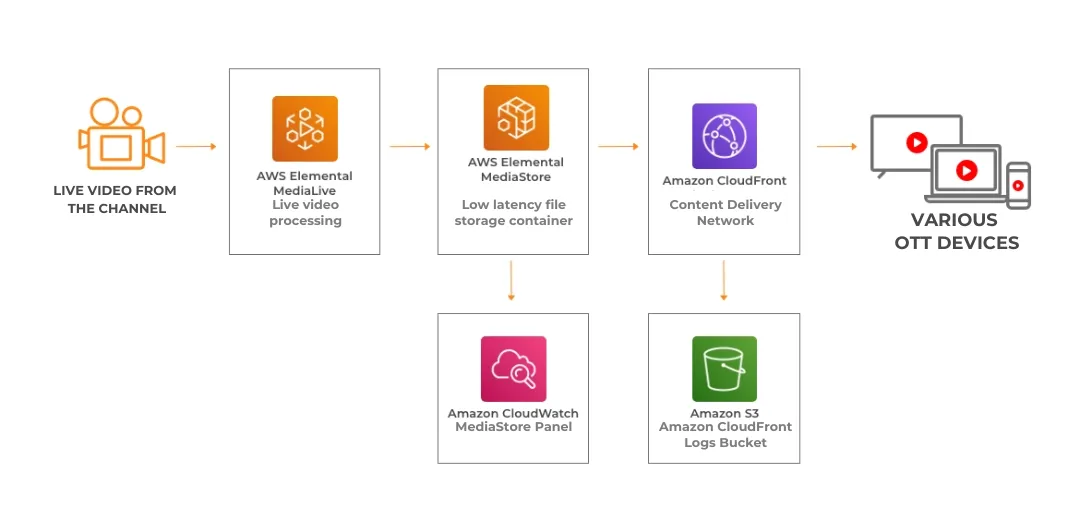
AWS provides a live streaming solution that combines AWS Elemental MediaLive and AWS Elemental MediaStore with Amazon CloudFront to create a highly resilient and scalable architecture that delivers your live content worldwide. The following diagram presents the architecture of live streaming video that can be used as a reference for deployment and customization of solutions.
Private Content Delivery
It is also possible to obtain the benefits of static content acceleration, dynamic content acceleration, online video streaming, and image optimization for private content. The operation is quite simple and practical; just generate a signed cookie after your users log in and protect the CloudFront distribution.
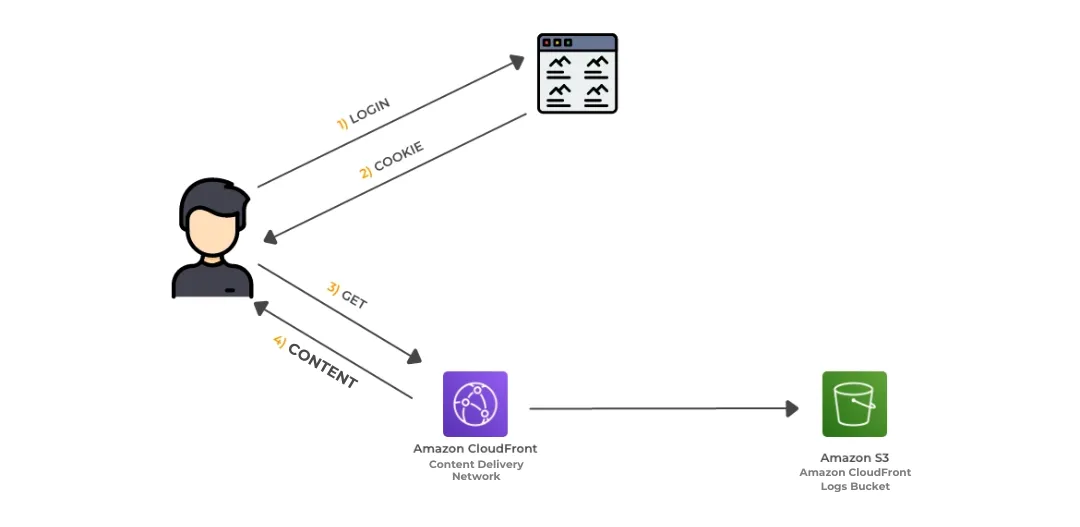
The cookie can last as long as necessary, and renewal can be done transparently within your application. With the cookie, all privately available content can be accessed without the need for additional configurations.